

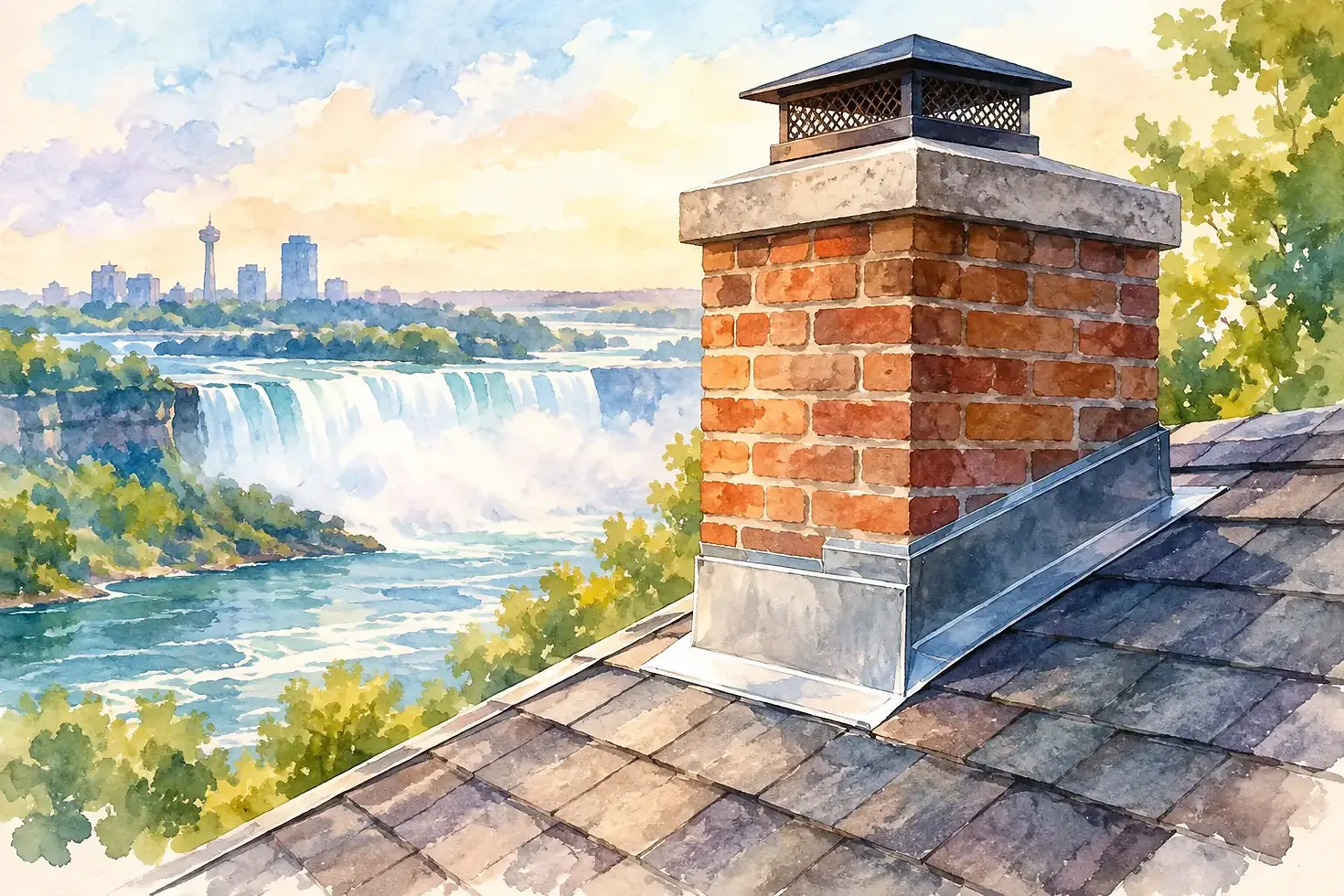
Chimney Flashing Guide for Niagara Homeowners
A water stain beside the chimney, a damp attic smell after heavy rain, or shingles lifting at the roof-to-brick joint can point to one small but critical area: the flashing. This chimney flashing guide helps Niagara homeowners understand what is happening around their chimney, what a proper repair involves, and when it is time to arrange a professional inspection.
Chimneys interrupt the roof surface, so rain and melting snow need a carefully built path around them. When that path fails, water can travel under shingles and into the roof deck, insulation, ceilings, and walls. A minor flashing issue is often repairable. Left through another wet season, it can become a larger roofing and interior repair.
What chimney flashing does
Chimney flashing is the system of metal pieces and waterproof materials installed where the roof meets the chimney. Its job is not simply to cover a gap. It redirects water away from the chimney and onto the roof surface, where it can drain safely into the eavestroughs.
A quality installation relies on layering. Shingles, underlayment, flashing, sealant, and masonry details must work together without trapping water. Caulking alone is not a flashing system. It can help seal specific joints, but it will eventually crack, shrink, or separate under Ontario's freeze-thaw cycles and summer heat.
The material matters as well. Galvanized steel is common and cost-effective, while aluminum, copper, and lead-coated products may suit particular roof designs or masonry conditions. The right choice depends on the roof material, chimney construction, exposure to weather, and the expected service life of the roof.
The key parts of a chimney flashing system
Most chimney flashing problems occur because one part of the system is missing, poorly integrated, or nearing the end of its service life. A correctly detailed installation commonly includes these four elements:
Apron flashing sits at the front, or downhill side, of the chimney. It carries water away from the chimney face and onto the shingles.
Step flashing runs up both sides of the chimney. Individual metal pieces are woven with each shingle course so water cannot work its way behind the roofing.
Counter flashing is installed into the chimney's mortar joints or masonry. It overlaps the step and apron flashing, protecting the top edge from water entry.
Back-pan flashing or a cricket sits on the uphill side. Larger chimneys often need a cricket, which is a small peaked structure that splits water, snow, and debris around the chimney rather than allowing it to collect behind it.
Not every chimney requires the same detail. A narrow chimney on a steep shingle roof may not need a cricket, while a wide chimney on a lower-slope roof often does. This is why a site inspection is more reliable than a one-size-fits-all repair recommendation.
Signs your chimney flashing may be failing
Leaks around a chimney are not always obvious. Water can enter at the flashing and show up several feet away inside the home. Look for brown ceiling marks near the chimney, bubbling paint, peeling wallpaper, damp insulation in the attic, or a musty smell following rain or a spring thaw.
Outside, watch for rusted or bent metal, loose flashing edges, cracked sealant, missing shingles, exposed nail heads, or mortar that is crumbling where counter flashing meets the brick. Moss and debris collecting behind the chimney can also slow drainage and hold moisture against vulnerable roof materials.
A leak that appears only during wind-driven rain can be especially frustrating. In those cases, the issue may be a lifted flashing edge, failed sidewall detail, or an opening in the masonry joint rather than a large, visible hole. Snow buildup and ice can reveal weaknesses too, particularly when repeated freezing and thawing force water beneath worn shingles.
Repair or replacement: how to make the right call
The best solution depends on the condition of the flashing and the roof around it. If the metal is sound and the problem is limited to a separated joint or small damaged area, a targeted repair may be appropriate. This could involve resetting a loose piece, replacing a damaged shingle course, repairing mortar joints, and applying sealant where it is genuinely needed.
Replacement is often the smarter investment when flashing is rusted through, improperly installed, repeatedly leaking, or tied into shingles that are nearing the end of their life. Pulling up aging shingles to make a short-term flashing repair can create unnecessary disruption. If a roof replacement is coming soon, replacing the chimney flashing at the same time usually provides a cleaner, longer-lasting result.
Property owners should be cautious about quick surface fixes. Roof cement spread over metal and masonry may stop a drip temporarily, but it can conceal the real failure and make future repairs more difficult. A proper repair identifies where water is entering and restores the layered drainage system.
What proper chimney flashing work looks like
A dependable contractor starts by inspecting more than the visible metal. The chimney masonry, roof slope, shingle condition, attic evidence, ventilation, and drainage pattern all affect the repair plan. If there is active leakage, the inspection should trace the likely water route instead of assuming the chimney is the only source.
For a full flashing replacement, the roofing materials around the chimney are carefully removed to expose the roof deck and existing details. Damaged decking should be addressed before new materials are installed. Underlayment is then brought up and around the chimney as required, followed by new apron, step, and back-pan flashing integrated with the shingles.
Counter flashing deserves close attention. It should be secured into appropriate masonry joints or installed using a detail suited to the chimney construction, then overlap the base flashing correctly. The goal is to allow movement and drainage while protecting the upper edge. Simply fastening a flat strip of metal to brick and covering it with caulking is rarely a long-term answer.
The finished work should look orderly, but appearance is only part of the standard. The most valuable details are the ones that manage water during a hard Niagara rainstorm, after snow accumulation, and through years of temperature changes.
Niagara weather adds pressure to small roof details
In the Niagara Region, chimney flashing has to withstand more than ordinary rainfall. Freeze-thaw cycles can open masonry joints and fatigue sealants. High winds can lift older shingles or loosen exposed edges. Heavy wet snow can build up behind a chimney, while spring meltwater tests whether the uphill flashing directs water properly.
Older homes can present additional challenges. The chimney may have deteriorated mortar, uneven brickwork, or flashing that has been patched several times over decades. In these situations, the roofing repair and masonry condition need to be considered together. New flashing cannot perform as intended if the masonry surface securing it is unstable.
Commercial and multi-unit properties may have different details, especially where chimneys meet flat roofing systems. Modified bitumen, membrane roofs, metal details, and drainage design require a repair plan suited to that roof type. The principle remains the same: water must be directed away from every penetration without relying on exposed sealant as the primary defence.
When to arrange a professional inspection
Call for an inspection if you see interior water marks, recurring leaks near a chimney, loose flashing, visible rust, or damaged shingles around the chimney base. It is also wise to have the flashing assessed before listing a property, after a major windstorm, or when budgeting for a roof replacement.
A detailed quote should explain whether the recommendation is a localized repair, flashing replacement, masonry-related work, or a broader roof solution. Ask what materials will be used, how the flashing will integrate with the roof, and whether nearby shingles or decking need attention. Clear answers help you compare quotes based on workmanship, not just the lowest initial number.
For Niagara homeowners, landlords, and property managers, Pro.Found Roofing provides practical chimney flashing assessments with licensed and insured workmanship, affordable options, and direct owner oversight on site. A free detailed quote gives you a clear scope before work begins, whether the repair is small or part of a full roofing project.
Water rarely waits for a convenient time to enter a roof. If your chimney area shows early warning signs, arranging an inspection now can protect the structure below it and give you a straightforward plan before the next storm puts the flashing to the test.


Comments