

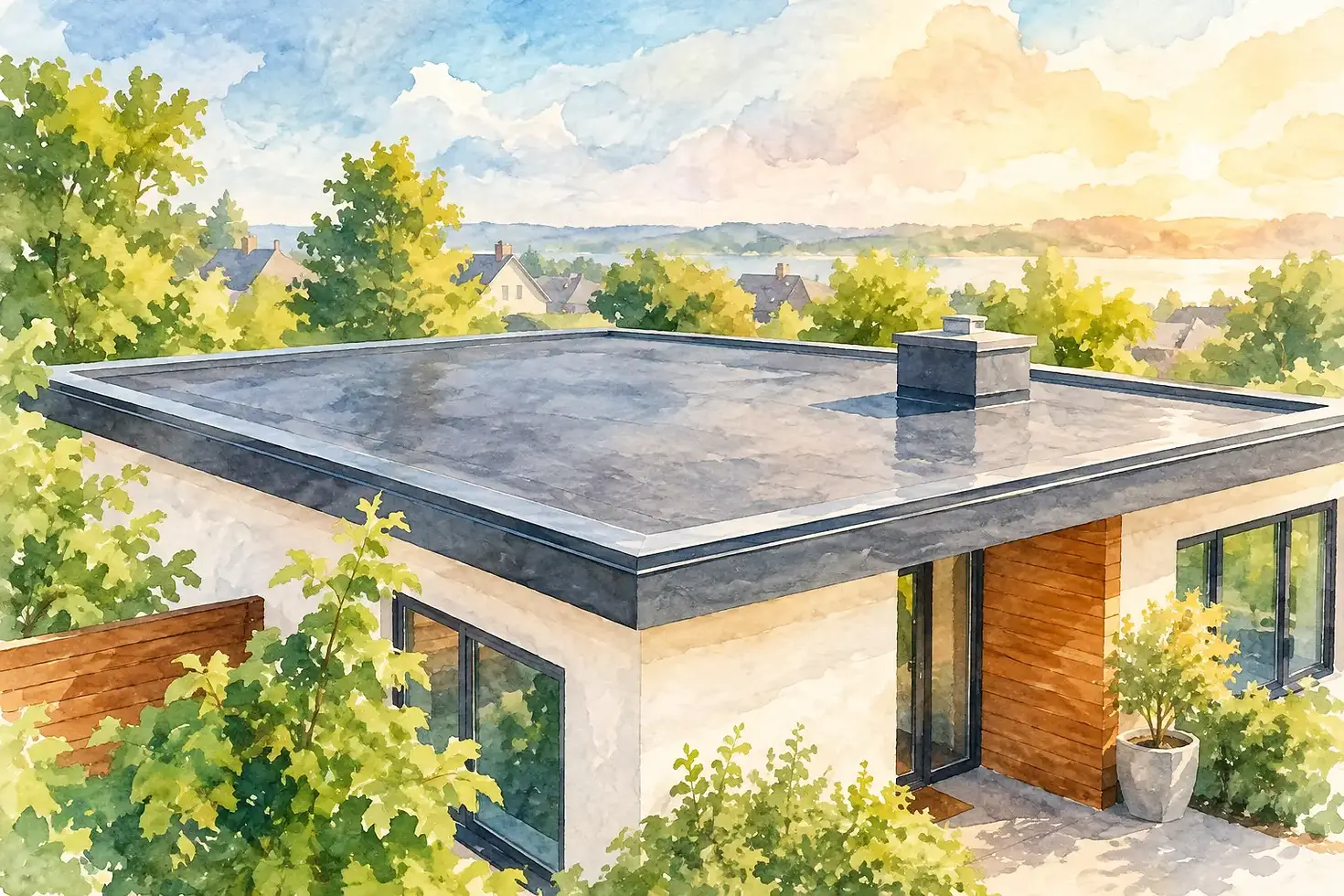
How to Choose Flat Roofing for Your Property
A flat roof rarely fails because it looks flat. It fails because water was given nowhere to go, the wrong membrane was selected, or small details around drains, walls, and equipment were rushed. Knowing how to choose flat roofing means looking beyond the surface material and choosing a complete system that suits your property, budget, and Niagara weather.
For a garage, addition, commercial unit, apartment building, or low-slope section of a home, the best choice is not always the lowest initial quote. A well-planned flat roof should manage ponding water, resist wind and temperature changes, protect the building below, and remain practical to repair years from now.
How to Choose Flat Roofing for Niagara Conditions
In the Niagara Region, a flat roof needs to handle freeze-thaw cycles, snow loads, heavy rain, summer heat, and wind. That makes drainage and installation quality just as important as the roofing product itself. A membrane that performs well in a mild climate can still develop issues here if seams, flashings, insulation, or edge details are poorly installed.
Start by identifying what the roof must do. A small residential addition may need an affordable, durable membrane with straightforward drainage. A commercial building may have rooftop HVAC units, frequent maintenance traffic, multiple drains, and a larger area where even a minor slope problem can create standing water. Properties with tenants or valuable equipment below may place a higher value on long-term durability and predictable maintenance.
The roof's current condition also matters. If water damage has reached the deck or insulation, installing a new membrane over the old system may not be the right answer. A detailed assessment should determine whether the existing roof can be recovered or whether a full tear-off is needed to address hidden moisture and restore a sound base.
Compare Flat Roofing Materials by More Than Price
Most flat and low-slope roofs use a membrane system rather than shingles. Each option has strengths, limitations, and suitable applications.
Modified Bitumen
Modified bitumen is a proven roofing material often used on residential and commercial low-slope roofs. It is built in layers and can offer strong puncture resistance, which is useful where roof access or maintenance traffic is expected. Depending on the system, it may be installed with heat, adhesive, or self-adhering membranes.
Its layered construction can make it a dependable option, but workmanship is critical at seams and flashing transitions. It may cost more than a basic single-ply installation, particularly where details are complex. For many property owners, its durability and familiar repair methods make it worth considering.
EPDM Rubber Roofing
EPDM is a synthetic rubber membrane known for flexibility and weather resistance. It is commonly used on larger flat roofs and can be a practical choice where long membrane runs reduce the number of seams.
A black EPDM roof absorbs heat, while lighter options or coatings may be considered where heat gain is a concern. As with any membrane, seams, penetrations, and perimeter fastening must be completed correctly. EPDM can be an excellent value, but it should be selected as part of a full drainage and insulation plan, not as a stand-alone material decision.
TPO Roofing
TPO is a white, heat-welded single-ply membrane that reflects sunlight and is popular on commercial buildings. Its bright surface can help reduce rooftop heat absorption, which may be useful for conditioned buildings with large roof areas.
The quality of welded seams and the experience of the installer are central to TPO performance. Material thickness, attachment method, and flashing details should be clearly outlined in the quote. A lower-cost TPO proposal is not necessarily comparable to a higher-quality system with thicker membrane, upgraded insulation, and stronger edge detailing.
PVC Roofing
PVC is another heat-welded membrane often chosen for commercial applications. It performs well in areas exposed to oils, grease, or chemical exhaust, such as restaurant-related roofs. It can be a strong long-term choice, although initial costs may be higher than other systems.
For a typical home addition or detached garage, PVC may offer more than the project requires. For a commercial property with specific exposure concerns, its added performance can be a sensible investment.
Drainage Is the Detail That Protects the Whole Roof
“Flat” should not mean level. A properly designed flat roof has a slight slope that directs water to drains, scuppers, or gutters. When water remains on a roof after normal drying conditions, it accelerates wear, adds weight, and exposes weaknesses around seams and penetrations.
Ask where water will go during a heavy Niagara rainstorm and during spring thaw. Existing drains may be undersized, blocked, or positioned poorly. On smaller roofs, a sloped substrate may be enough. On larger roofs, tapered insulation can create positive drainage while improving thermal performance.
Drainage improvements add to the initial project cost, but they can prevent much larger expenses later. If a quote does not address standing water on an existing roof, ask why. A new membrane installed over an unresolved drainage problem is still working against the same problem every day.
Consider Insulation, Ventilation, and the Roof Deck
Flat roofing is part of the building envelope, not simply a waterproof cover. Insulation affects indoor comfort, energy use, condensation risk, and the roof's ability to shed water when tapered insulation is used.
The right insulation level depends on the building type, roof assembly, existing construction, and local code requirements. A residential addition may need an approach that manages condensation around a warm interior space. A commercial roof replacement may need to meet specific performance requirements while accommodating existing curbs, doors, and mechanical equipment.
The deck below the roofing system must also be inspected. Wood, steel, and concrete decks each require appropriate fastening and preparation. Soft, rotted, or wet sections should be repaired before the new system is installed. Skipping this step can compromise even premium roofing materials.
Match the System to Roof Traffic and Details
A roof with no equipment and few penetrations is simpler to protect than one with vents, skylights, plumbing stacks, chimneys, HVAC units, and parapet walls. Every transition is a potential leak point, so detailed flashing work matters.
Think about who will access the roof after installation. Commercial maintenance crews may need designated walk pads to protect the membrane. A building with HVAC equipment should allow technicians to work without damaging seams or puncturing the roof surface. Skylight curbs, chimney flashing, and wall transitions need a system designed around them rather than patched in as an afterthought.
If your building has repeated leaks in the same location, the issue may be a detail rather than the main roof field. A thorough contractor will investigate the source instead of simply applying another layer of sealant.
Read Flat Roofing Quotes Carefully
A useful quote should explain what is included, not just provide a square-foot price. Before selecting a contractor, make sure you understand the membrane type and thickness, insulation scope, removal of existing roofing, deck repairs, drainage work, flashing, edge metal, debris removal, and warranty coverage.
You should also ask whether the price includes permits when required and how unexpected deck damage will be handled. Roofing projects sometimes uncover concealed issues, especially on older buildings. Clear communication about possible additional work helps avoid surprises.
The lowest quote may exclude important parts of the system, such as insulation upgrades, perimeter metal, drain work, or proper removal of saturated materials. Compare proposals line by line. An affordable price should still provide a complete installation, licensed and insured workmanship, and a clear path to service if a concern arises after completion.
Choose a Contractor Who Is Accountable on Site
Flat roofing is detail-driven work. Material manufacturer specifications are only as good as the crew installing the system. Look for a contractor that can explain the recommended assembly in plain language, provide a detailed estimate, and show that they understand local weather and building conditions.
Ask who will supervise the work, how the property will be protected, and what workmanship warranty applies. For homeowners and property managers, it also helps to choose a contractor that can handle related work such as roof repairs, skylight installation, and chimney flashing without passing responsibility between several trades.
At Pro.Found Roofing, the owner visits every job site to oversee workmanship and customer satisfaction. That hands-on accountability matters when decisions about drainage, flashing, and roof details need to be made properly on site, not guessed at from a distance.
Plan for Maintenance Before You Need Repairs
Even a well-installed flat roof benefits from regular attention. Keep drains, scuppers, and gutters free of leaves and debris. After major wind, rain, or freeze-thaw events, look for standing water, displaced metal, damaged sealant, or debris around rooftop equipment. Property owners should avoid unnecessary foot traffic and arrange professional inspections if a leak appears.
A small issue caught early is usually easier and more affordable to repair than moisture that spreads into insulation, decking, walls, or ceilings. If you are comparing options now, get a detailed free quote that addresses your building's drainage, materials, and flashing needs. The right flat roof should leave you confident when the next Niagara storm arrives.


Comments