

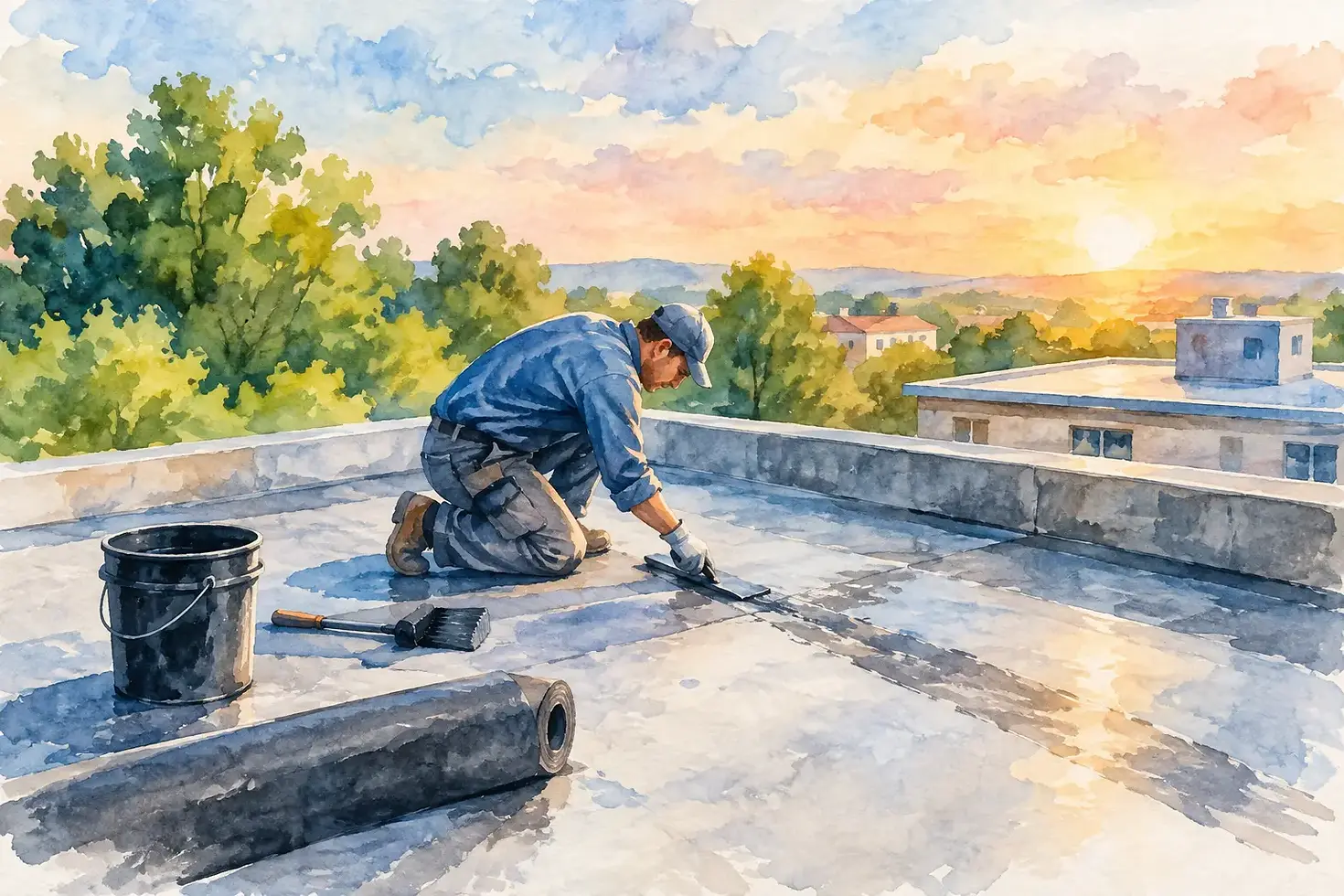
Can Flat Roofs Be Repaired? Know When to Act
A flat-roof leak rarely stays in one place. Water can travel beneath the membrane, soak insulation, and show up as a ceiling stain several feet from the actual opening. So, can flat roofs be repaired? In many cases, yes - provided the issue is found early and the roof system is still structurally sound.
For Niagara homeowners, landlords, and commercial property managers, the right decision comes down to more than whether water is getting in. The age of the roof, the condition of the membrane, drainage, past repairs, and moisture trapped below the surface all matter. A professional inspection separates a targeted, affordable repair from a short-term patch that delays a needed replacement.
Can Flat Roofs Be Repaired After a Leak?
A flat roof can often be repaired when damage is limited to a defined area. Common repairable issues include punctures, open seams, damaged flashing, loose edge details, small membrane splits, and leaks around roof penetrations such as vents, drains, skylights, or HVAC equipment.
Flat roofs are not truly flat. They are built with a slight slope that directs water toward drains, scuppers, or eaves. When drainage is working and the roof membrane remains generally healthy, repairing the damaged section can protect the building and extend the roof's service life.
The key is finding the source accurately. Applying sealant where water appears inside is rarely a reliable fix. The actual leak may be uphill from the stain, under a flashing detail, or at a seam that opens only after repeated freeze-thaw cycles. Niagara weather puts roof materials through those cycles every winter, which is why small defects deserve attention before they become larger problems.
Signs Your Flat Roof May Need Repair
Water stains, dripping ceilings, and active leaks are clear warning signs, but they are not the only ones. A roof may need service before water reaches the interior.
Watch for standing water that remains more than 48 hours after rainfall, bubbling or blistering in the membrane, cracked sealant around penetrations, lifting seams, damaged metal edging, or granules washing from an older modified-bitumen surface. On commercial roofs, visible foot-traffic damage near rooftop equipment is also common.
Inside the building, a musty smell, peeling paint, swollen drywall, or unexplained higher humidity can point to a slow leak. Property owners should also inspect after major wind events, heavy snowfall, and spring thaw. A roof that looks acceptable from the ground can still have vulnerable details at the perimeter or around mechanical units.
Do not climb onto a wet or icy roof to investigate. Aside from the fall risk, walking on certain roof systems can worsen hidden damage. A licensed and insured roofing contractor can inspect the membrane, drainage paths, flashing, and substrate safely.
When a Repair Makes Sense
A repair is usually the practical choice when the roof is relatively young, leaks are isolated, and the membrane has not reached the end of its useful life. For example, a puncture caused by a fallen branch, a failed pipe boot, or a separated seam can often be addressed without replacing the full roof.
The same is true for localized flashing problems. Chimney flashing, parapet walls, skylight curbs, drains, and transitions between roof areas are frequent leak points. Repairing these details properly requires compatible materials and careful preparation. A patch that does not bond correctly to the existing membrane may fail during the next season of temperature changes.
Repair is also a sensible first step when an inspection confirms that insulation and decking beneath the membrane are dry. Once water has saturated those layers, simply covering the top surface may trap moisture inside the assembly. That can lead to mould, deteriorated decking, reduced insulation performance, and recurring leaks.
When Flat Roof Replacement Is the Better Investment
There comes a point where repeated repairs cost more than a planned replacement. If leaks are appearing in several areas, the membrane is brittle or badly weathered, or previous patches cover large portions of the roof, a new system may offer better value and more dependable protection.
Replacement should also be considered when there is widespread ponding water, significant membrane shrinkage, soft areas underfoot, damaged roof decking, or moisture throughout the insulation. These conditions indicate a broader roofing-system problem rather than one isolated defect.
Age matters, but it should not be the only deciding factor. Different flat-roof materials age differently. EPDM rubber, modified bitumen, TPO, and other systems each have distinct repair methods and expected lifespans. A roof nearing the end of its service life may still be repairable, but spending heavily on recurring patches may not be the most cost-effective choice.
For landlords and commercial decision-makers, planned replacement can also reduce disruption. It allows time to budget, choose materials, coordinate tenants or operations, and complete the work in suitable weather. Financing may help make a necessary project more manageable when damage is discovered unexpectedly.
Why Ponding Water Changes the Conversation
Standing water is one of the most common concerns with flat roofs. A small amount of water after a storm is not always an emergency, especially if it drains within a day or two. Water that remains for days, however, adds weight, accelerates membrane wear, and exposes weak seams and flashings.
Ponding can result from blocked drains, poor slope, settled insulation, structural movement, or an aging roof surface. Clearing debris may solve a simple drainage issue. In other cases, the repair may need to include drain work, tapered insulation, or corrections to the roof's slope.
This is why a quote should address the cause, not only the visible symptom. Recoating or patching a low spot without improving drainage can leave the same area vulnerable year after year.
What a Proper Flat-Roof Repair Involves
The repair process starts with an inspection of the entire roof, not just the reported leak. A contractor checks seams, penetrations, perimeter details, drains, surface wear, and signs of trapped moisture. Depending on the roof system and suspected damage, further testing may be recommended to understand what is happening beneath the membrane.
Once the source is identified, the damaged area is cleaned and prepared. Wet or deteriorated material may need removal before a compatible patch, membrane section, flashing repair, or sealant detail is installed. The surrounding area must be properly bonded and sealed, with special attention to edges where water can work its way underneath.
After the repair, drainage should be reviewed again. A sound repair will not perform as intended if leaves, sediment, or ice repeatedly block the route to a drain or scupper. Regular maintenance is especially worthwhile on roofs surrounded by mature trees or located beneath higher roof sections.
Avoid the Quick Fix That Creates a Bigger Problem
Roof coating, roofing cement, and store-bought patch products can appear to stop a leak temporarily. They are not always compatible with the existing membrane, and they can make future professional repairs more difficult. A thick layer of sealant can also hide a deteriorating seam rather than correct it.
Temporary action is appropriate when it prevents immediate interior damage while help is arranged. Place containers below drips, move valuables away from the affected area, and document the damage for your records. Then arrange an inspection as soon as conditions are safe.
If a leak occurs during a storm, the permanent repair may need to wait for a dry work window. That does not mean the problem should be ignored. A roofing professional can advise on temporary protection and schedule the correct repair once the roof can be properly prepared.
Get a Clear Answer Before Small Damage Spreads
Flat-roof decisions should not be based on guesswork or a single visible stain. A detailed assessment gives you a clearer picture of the roof's condition, the likely repair scope, and whether replacement would be the wiser long-term investment.
Pro.Found Roofing serves property owners across the Niagara Region with practical flat-roof repairs, replacements, and straightforward estimates. The owner visits every job site to oversee workmanship and customer satisfaction, so you have direct accountability from inspection through completion.
If your roof is holding water, showing wear, or leaking indoors, acting early gives you more repair options and more control over cost. Get a free quote today and protect the building before the next round of rain, snow, and freeze-thaw weather puts a small weak spot to the test.


Comments