

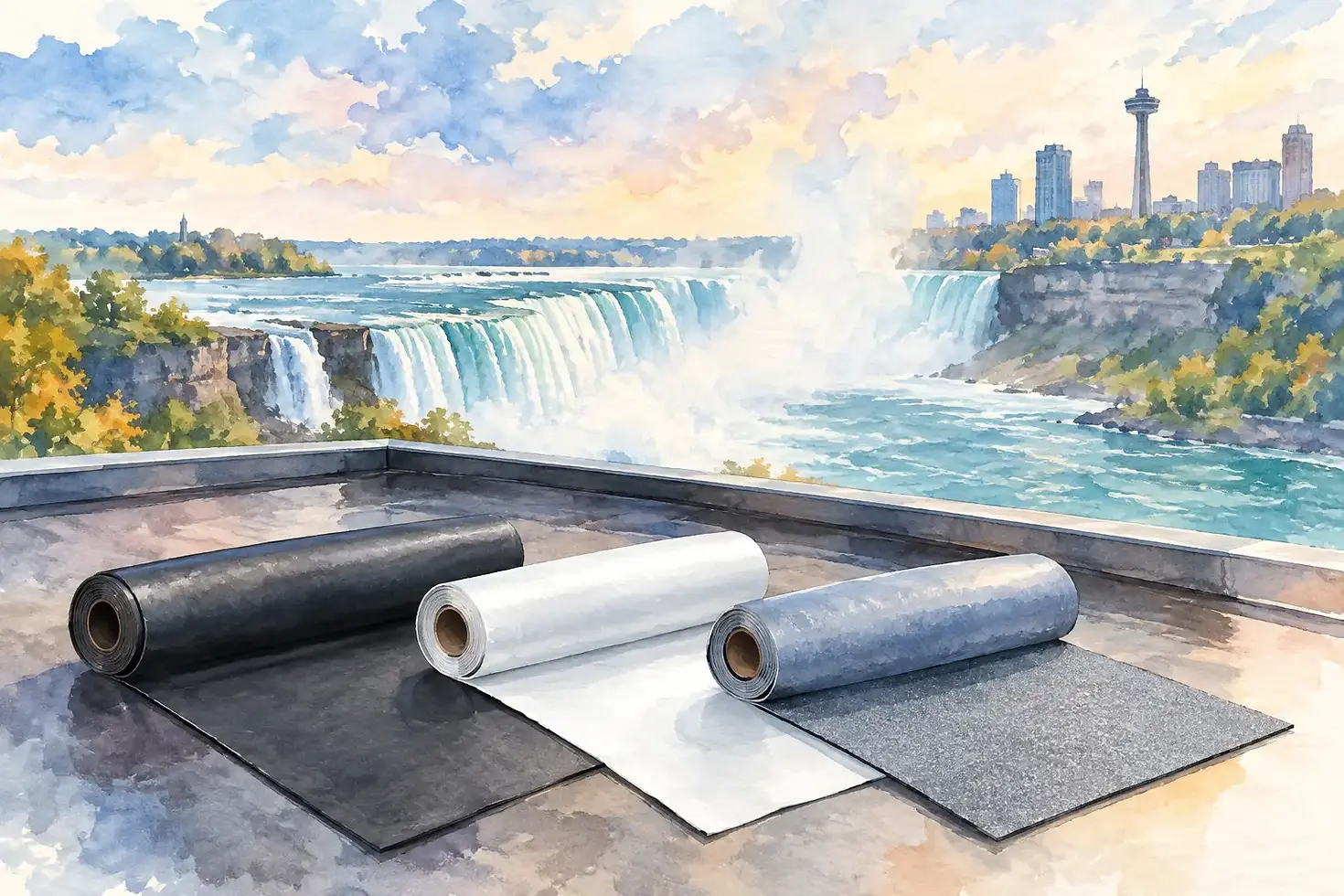
Flat Roof Membrane Comparison for Niagara Properties
A flat roof membrane comparison is most useful before a leak forces a rushed decision. The right system has to do more than keep water out on installation day. It needs to suit your building, drainage design, roof traffic, budget, and the freeze-thaw weather Niagara properties face every year.
For a home addition, apartment building, plaza, industrial facility, or low-slope commercial roof, there is no one membrane that is automatically best. EPDM, TPO, PVC, and modified bitumen can all perform well when they are specified properly and installed by a qualified crew. The better question is: which system makes sense for this roof and its long-term maintenance needs?
Flat Roof Membrane Comparison: The Main Options
EPDM: proven rubber protection
EPDM is a black synthetic rubber membrane that has been used on low-slope roofs for decades. It is known for flexibility, weather resistance, and a straightforward appearance. It is commonly installed in large sheets, which can reduce the number of seams compared with narrower-roll systems.
For Niagara weather, EPDM's flexibility is a practical advantage. It can handle seasonal temperature changes without becoming brittle when the roof is properly designed and maintained. It is often a sensible choice for larger roofs, roofs with fewer penetrations, and property owners who want a proven membrane with a dependable service history.
The trade-off is colour and energy performance. Standard black EPDM absorbs more heat than white reflective membranes. That may not be a concern on every property, but it can matter for air-conditioned commercial spaces or buildings pursuing lower cooling loads. Seams, perimeter details, drains, and penetrations also require careful workmanship. A good membrane cannot overcome poor flashing or careless seam preparation.
TPO: reflective and widely specified
TPO, short for thermoplastic polyolefin, is usually white or light coloured and heat-welded at the seams. Its reflective surface can help limit heat absorption, making it popular on commercial buildings and newer low-slope applications. Heat-welded seams create a strong connection when installed correctly, which is valuable on roofs with a lot of standing water risk, mechanical units, vents, and other details.
TPO is often selected when owners want a bright, modern membrane and potential energy benefits. It is also available in different thicknesses, which affects puncture resistance and expected durability. Comparing quotes should never stop at the word “TPO.” Ask what thickness is proposed, how edges will be secured, and whether walk pads are included where service technicians regularly access rooftop equipment.
TPO quality and installation standards can vary between manufacturers and systems. The lowest price may reflect a thinner membrane, fewer detail upgrades, or an installation scope that does not address wet insulation or drainage issues below. For that reason, TPO is a strong option, but only when the complete assembly is appropriate for the roof.
PVC: strong choice around chemicals and grease
PVC is another heat-welded, reflective single-ply membrane. It has a long track record in commercial roofing and is especially useful where the roof may be exposed to grease, oils, or certain chemicals. That makes PVC worth considering for restaurants, food-related facilities, and buildings with specialized rooftop exhaust systems.
Like TPO, PVC offers reflective performance and welded seams. It is generally viewed as a premium choice, and material costs can be higher. That higher upfront price may be justified when the building use creates chemical exposure that could shorten the life of another membrane.
PVC is not automatically necessary for a standard residential flat roof or a simple office building. If the roof has no grease exhaust, unusual chemical exposure, or demanding operational requirements, a well-designed TPO or EPDM system may provide better value. The membrane should follow the building's conditions, not a one-size-fits-all sales pitch.
Modified bitumen: layered protection with familiar repairability
Modified bitumen is an asphalt-based membrane system installed in rolls. It can be applied with heat, cold adhesive, or self-adhered methods, depending on the product and site conditions. Many systems use multiple layers, providing redundancy and a substantial, durable surface.
This material remains a practical option for residential flat sections, garages, multi-unit buildings, and commercial roofs. It is particularly familiar to many property owners because it has been used for years across Ontario. A properly installed modified bitumen roof can stand up well to foot traffic and can be easier to repair in localized areas than some single-ply systems.
Its main consideration is weight and installation method. A layered asphalt-based system is heavier than a single-ply membrane, so the roof structure must be suitable. Seams and laps still need careful attention, and reflective coatings or cap sheets may be recommended to improve UV performance. It can be an excellent system, but it should be selected with the deck condition and drainage plan in mind.
What Matters More Than the Membrane Name
Membrane selection matters, but the roof assembly and installation details often decide whether a flat roof performs for decades or develops leaks early. Water typically finds a weak seam, an unsealed penetration, a failed drain connection, or deteriorated flashing before it passes through the centre of a quality membrane.
Drainage is the first issue to assess. Flat roofs are not truly flat. They need positive slope toward drains, scuppers, or eaves. Small areas of ponding may not cause immediate failure, but water that remains after several days can accelerate wear and expose underlying installation problems. If a replacement quote only discusses the new membrane and ignores persistent ponding, it may not solve the reason the old roof failed.
The condition of the roof deck and insulation is equally important. Moisture trapped below a new membrane can lead to rot, mold concerns, reduced insulation performance, and future leaks that are harder to trace. Some roofs can be recovered over an existing system, while others need a full tear-off. That decision should follow an inspection, not a blanket promise that one approach is always cheaper.
Flashing details also deserve close attention. Skylights, parapet walls, chimneys, HVAC curbs, pipe boots, and transitions to shingle or metal roofing need compatible materials and careful finishing. A flat roof can look neat from ground level while hiding weak details at every penetration.
How to Choose for Your Property
Start with the building type and how the roof is used. A residential addition with no rooftop equipment has different needs than a retail plaza where technicians access HVAC units every month. A restaurant exhaust area may point toward PVC. A large warehouse looking for a reflective roof may be well suited to TPO. A smaller roof with a proven preference for rubber may be a good EPDM candidate. A property needing a layered, durable system may benefit from modified bitumen.
Next, consider the full cost of ownership rather than material price alone. A lower initial quote can become expensive if it omits insulation replacement, drainage correction, perimeter metal, or proper flashing. On the other hand, the most expensive membrane is not always the best investment if the building does not need its specialized performance features.
Ask every contractor to explain the proposed scope in plain language. You should know whether the old roof will be removed, how wet materials will be handled, what insulation is included, where water will drain, how penetrations will be flashed, and what workmanship warranty applies. Manufacturer warranties can also have specific requirements for approved materials, installation methods, and maintenance, so compare them carefully instead of relying on a headline number.
Get an Assessment Before You Commit
A site inspection is the clearest way to turn a flat roof membrane comparison into a sound decision. The roof should be examined for ponding, membrane cracks, loose seams, soft deck areas, blocked drains, failed flashing, and signs of water inside the building. Those conditions affect both the recommended system and the realistic project budget.
Pro.Found Roofing provides practical flat-roof guidance for homeowners, landlords, builders, and commercial property owners across Niagara, with the owner on site to oversee workmanship and customer satisfaction. A detailed estimate can show what the roof needs now, what can be planned for later, and where financing may help if replacement cannot wait.
Your roof does not need the trendiest membrane. It needs the system that fits the building, directs water where it belongs, and is installed with care at every seam and detail. Get a free quote today while the decision is still yours to make on your schedule.


Comments