

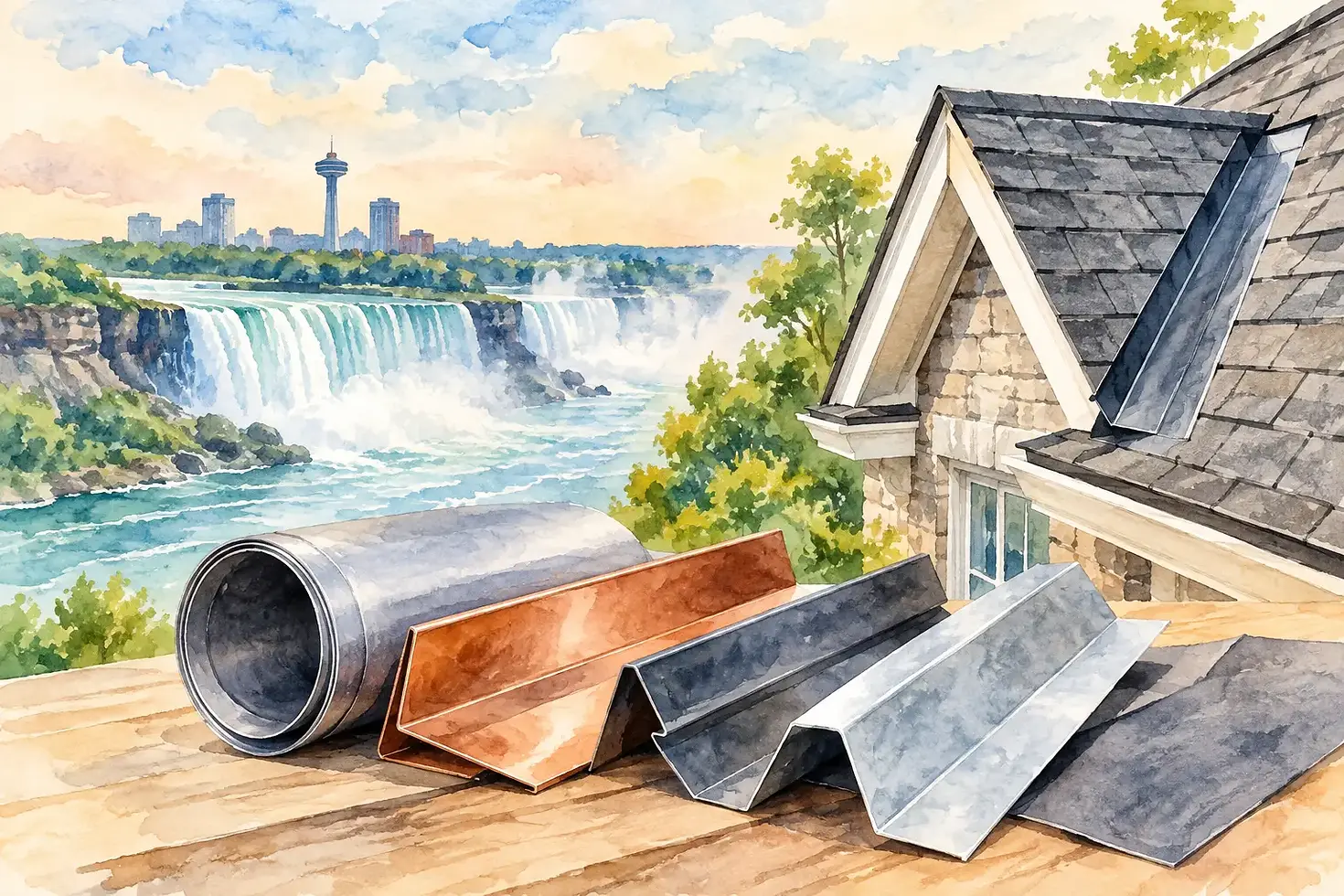
Roof Flashing Materials for Niagara Homes
A roof can have newer shingles and still leak at the chimney, skylight, wall connection, or valley. In many cases, the issue comes down to the roof flashing materials beneath and around those vulnerable areas. Flashing directs water away from joints where shingles alone cannot provide dependable protection - a detail that matters even more through Niagara's rain, wind, snow, and freeze-thaw cycles.
Choosing the right flashing is not simply a matter of selecting the most expensive metal. The roofing material, roof pitch, nearby masonry, local weather exposure, and the condition of the existing roof all affect what will perform well. A properly installed, compatible flashing system is what protects the structure behind the shingles.
What Roof Flashing Does
Roof flashing is a thin, weather-resistant material installed at transitions and penetrations in a roof system. It creates a controlled path for water to run onto the roof covering and into the eavestroughs, rather than behind shingles, siding, brick, or trim.
Common flashing locations include chimneys, plumbing vents, skylights, dormers, roof-to-wall intersections, valleys, and the edges of low-slope roof sections. Some flashing is visible, while other pieces are layered underneath shingles or roofing membranes. That layering is critical. Water should always shed over the next material below it, not find a seam that leads inward.
When flashing fails, the first signs may be small: a stain on a ceiling, loose shingles beside a chimney, rust marks, or damp insulation in an attic. Left alone, a minor flashing defect can lead to damaged roof decking, mould growth, masonry deterioration, and interior repairs.
Roof Flashing Materials Compared
The best material depends on the application. A dependable installer considers durability, compatibility, appearance, and cost before recommending a repair or replacement.
Aluminum flashing
Aluminum is lightweight, affordable, and widely used on residential roofs. It does not rust, making it a practical option for many valleys, vents, and roof-to-wall details. It is also easy to form around standard roof shapes.
Its main limitation is chemical compatibility. Bare aluminum should not be installed where it will react with certain materials, including wet mortar or copper components. On a brick chimney, for example, a protective coating or another material may be the better choice. Aluminum can also dent more easily than heavier metals, particularly where it is exposed.
Galvanized steel flashing
Galvanized steel is steel coated with zinc to resist corrosion. It is strong, cost-effective, and a familiar choice for chimney flashing, drip edges, valleys, and many shingle roofing systems. Properly coated and installed galvanized steel handles demanding conditions well.
The quality of the galvanizing and finish matters. Once a coating is scratched, worn down, or poorly detailed at a joint, rust can develop over time. Painted or factory-finished steel may offer a cleaner appearance and added protection, especially when matched to steel roofing or metal trim.
Copper flashing
Copper is a premium flashing material with a long service life. It is highly durable, handles complex shapes well, and develops a natural patina as it ages. It is often chosen for high-end homes, heritage properties, and long-term chimney restoration work.
The trade-off is cost. Copper requires a larger upfront investment and should be installed by roofers who understand its expansion, fastening, and compatibility requirements. Copper runoff can also affect nearby materials, so it should not be casually combined with aluminum or galvanized steel. When the roof itself has a shorter remaining life, installing expensive copper flashing without planning for the eventual reroof may not be the best use of the budget.
Lead-coated copper and specialty metals
Lead-coated copper and other specialty flashing products are used in select commercial, heritage, and complex roofing applications. They can offer excellent forming ability and longevity, but they are not necessary for every roof. Material selection should reflect the building, project scope, and expected service life rather than a one-size-fits-all recommendation.
For flat roofs, flashing often includes membrane-compatible materials instead of conventional sheet metal alone. Modified bitumen, EPDM, TPO, and other flat roofing systems each need compatible edge details, penetration boots, and wall flashings. A detail that works on an asphalt shingle roof may not work on a low-slope commercial roof.
Matching Flashing to Your Roof System
Flashing should work with the roof, not compete with it. Asphalt shingle roofs commonly use galvanized steel or aluminum details, depending on the location and surrounding materials. Steel roofing may call for colour-matched steel trim and closure details designed for that panel system. Flat roofs require flashing integrated into the membrane installation.
The chimney deserves special attention. A properly flashed chimney typically uses step flashing along the sides, apron flashing at the front, and a back pan or cricket behind it where needed. The counterflashing is then integrated into the masonry joints or another secure wall detail. Applying caulking over an old, failed chimney joint may slow a leak briefly, but it does not replace correct flashing.
Skylights also need manufacturer-approved flashing kits or carefully integrated site-built details. Reusing old flashing during a skylight replacement can create a weak point, especially if the roof shingles are aged or the new skylight dimensions differ. In these cases, replacing surrounding shingles and flashing together is usually the more reliable repair.
Why Installation Matters as Much as the Metal
Even excellent roof flashing materials can fail when the installation is rushed. Improper overlaps, exposed fasteners, missing underlayment, incompatible sealants, and poorly placed nails can all send water behind the roofing system.
Step flashing is a good example. Each piece must be woven between individual shingle courses and extend correctly up the wall. One long piece of metal placed over the shingles may look acceptable from the ground, but it does not manage water the same way. Similarly, valley metal must be correctly supported and integrated with ice and water protection to manage heavy runoff and winter conditions.
In Niagara, ice buildup can expose installation shortcuts. Water that backs up beneath snow and ice needs secondary protection at eaves, valleys, and vulnerable transitions. This is why a flashing repair should include an inspection of the surrounding shingles, underlayment, roof decking, and ventilation where appropriate. The visible leak is not always the full problem.
Repair or Replace the Flashing?
A localized repair may make sense when the roof is otherwise in good condition and the issue is clearly limited to one damaged flashing detail. Examples include a lifted vent boot, a loose piece of counterflashing, or sealant failure around a small penetration.
Replacement is often the better value when flashing is rusted in several areas, the chimney detail has been repeatedly patched, or the shingles around the flashing are brittle and near the end of their service life. Replacing a roof without replacing worn flashing can also create avoidable labour and repair costs later. A complete reroof is the best opportunity to inspect every transition and build the system correctly from the deck up.
Property owners should be cautious about repairs that rely only on roof cement or surface caulking. Sealants have a role in properly designed details, but they age, crack, and separate with movement. They are not a substitute for correctly lapped metal, membrane, and shingles.
Questions to Ask Before Approving Flashing Work
Before choosing a contractor or accepting a repair quote, ask what material will be installed and why it suits your roof. You should also know whether the price includes removal of damaged shingles, replacement of underlayment, repairs to soft decking, and new flashing at all affected transitions.
For chimney work, ask whether the quote includes step flashing and counterflashing, not just visible metal at the front. For skylights, confirm that the flashing system is compatible with the skylight model and roof covering. On commercial or low-slope roofs, confirm that flashing details match the existing or new membrane system.
A clear estimate should explain the scope in plain language. It should identify what is being repaired, what may be uncovered once materials are removed, and how the finished work will direct water away from the building.
At Pro.Found Roofing, the owner visits every job site to oversee workmanship and customer satisfaction. That hands-on approach helps ensure flashing details are not treated as an afterthought, whether the project is a small leak repair, a chimney rebuild detail, or a full roof replacement.
If you have staining near a chimney, a leaking skylight, or aging metal at a roof transition, address it before another Niagara season puts more water where it does not belong. A free, detailed roofing quote can give you a practical repair plan, realistic pricing, and confidence in the materials chosen for your property.


Comments