

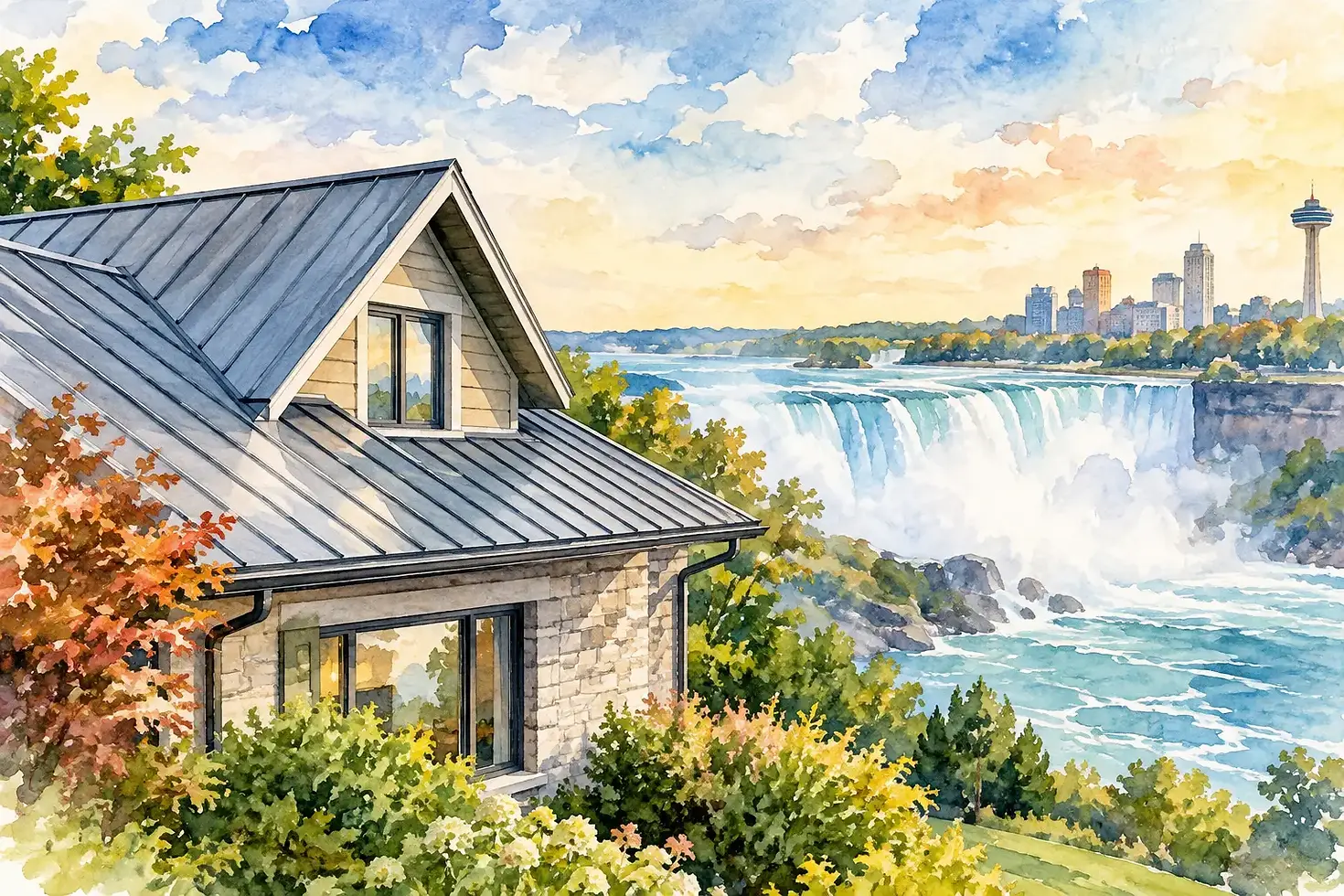
Is Steel Roofing Right for Your Niagara Home?
A roof replacement is not just about stopping leaks. It affects your home’s protection, curb appeal, energy performance, and long-term maintenance budget. For many Niagara property owners, steel roofing becomes part of the conversation when aging shingles keep needing repairs, storm damage has taken its toll, or they want a roof built for the long haul.
Steel is not the right answer for every building or every budget. But when it is selected carefully and installed correctly, it can be a dependable option for homes, cottages, agricultural buildings, and certain commercial properties across Welland, St. Catharines, Thorold, and the wider Niagara Region.
What Steel Roofing Handles Well in Niagara
Niagara roofs deal with a little of everything: heavy rain, snow loads, freeze-thaw cycles, wind, humidity, and intense summer sun. A properly installed steel roof is designed to stand up to those conditions without absorbing moisture, cracking like older shingles, or losing granules over time.
Steel panels shed rain and snow efficiently because of their smooth surface and overlapping profile. That does not mean snow disappears harmlessly on every home. On a steep roof, snow can release in large sheets, which is why snow guards may be recommended above doors, walkways, decks, or equipment. Good planning is part of the installation, not an afterthought.
Modern steel roofing also uses protective coatings that help resist corrosion and fading. The quality of the panel, coating, fasteners, flashings, and installation details all matter. A steel roof is a system. Choosing a good-looking panel without addressing ventilation, underlayment, edge protection, valleys, and chimney flashing can create problems that have nothing to do with the steel itself.
For homeowners who plan to stay in their property for many years, durability is often the biggest advantage. Steel can offer a much longer service life than a typical asphalt shingle roof, provided it is installed over a sound roof deck and maintained sensibly.
The Cost Question: Higher Up Front, Different Over Time
Steel roofing typically costs more up front than asphalt shingles. The final price depends on the roof size, pitch, number of valleys and dormers, panel profile, tear-off needs, access to the property, and the condition of the existing deck. A simple gable roof will be priced very differently from a multi-level home with skylights, chimneys, low-slope transitions, and detailed flashing work.
The better question is not only, “What does it cost today?” It is also, “What will this roof likely require over the next 20 to 40 years?” Asphalt shingles are an affordable and reliable choice for many homes, especially when budget is the immediate priority. Steel can make more financial sense for owners who value longevity, reduced replacement cycles, and a distinctive finished appearance.
For landlords and property investors, the calculation may also include tenant disruption and future maintenance planning. Replacing one long-lasting roof can be easier to manage than budgeting for several shorter-cycle replacements. Still, there is no universal winner. An honest estimate should compare suitable options for your property instead of treating the most expensive material as automatically best.
Financing can also make a necessary roof replacement more manageable when a leak, storm damage, or failing roof deck cannot wait. Clear pricing and a detailed scope of work are especially valuable when deciding between materials.
Steel Roofing Is Not One Look
Many people picture a shiny corrugated barn roof when they hear steel roofing. That style still has a place, but residential steel has come a long way. Homeowners can choose standing seam panels for a clean, modern finish, or steel shingles and stone-coated styles that create a more traditional appearance.
Colour selection matters in Niagara’s mix of heritage neighbourhoods, newer subdivisions, rural properties, and commercial buildings. Darker colours can create a strong architectural look, while lighter finishes may better suit certain siding colours and can reduce heat absorption. The right choice should complement the home, not compete with it.
Panel profile also affects performance. Standing seam systems conceal many of the fasteners and offer a refined look, but they may cost more than exposed-fastener panels. Exposed-fastener steel can be practical and economical for some applications, particularly garages, outbuildings, and agricultural structures. On a primary residence, the best fit depends on appearance expectations, roof design, and budget.
Installation Details Matter More Than the Sales Pitch
A steel roof can only perform as well as the work beneath and around it. Before new panels are installed, the contractor should assess the roof deck for rot, soft spots, moisture damage, and ventilation concerns. Covering a weak deck does not solve the issue. It can hide it until repairs become more complicated and expensive.
Some steel roofing projects can be installed over existing shingles where local requirements, roof condition, and manufacturer instructions allow. This can reduce tear-off costs and landfill waste. However, it is not always the smart choice. Existing shingles may conceal deck damage, create an uneven surface, or make flashing details less reliable. A contractor should explain why an overlay is appropriate or why a full tear-off is the safer route.
Flashing deserves close attention around chimneys, skylights, walls, valleys, vents, and roof transitions. These are the areas where water management is tested most aggressively. A roof can have excellent panels and still leak if flashing is poorly integrated. The same is true of fasteners: they need correct placement, spacing, and sealing to perform through Ontario’s seasonal movement.
Ventilation also remains important. Steel does not eliminate the need for a balanced attic ventilation strategy. Proper intake and exhaust ventilation can help control moisture, reduce heat buildup, and support the overall health of the roof assembly.
Noise, Condensation, and Other Common Concerns
A common concern is that steel roofs are noisy in rain. In a properly built residential roof system, the roof deck, attic insulation, underlayment, and ceiling assembly greatly reduce sound. The experience indoors is often comparable to other roofing materials. Noise is more noticeable in open structures with little insulation, such as some sheds or workshops.
Condensation is another issue worth discussing clearly. Steel itself does not cause condensation, but warm interior air meeting cold surfaces can create moisture problems when insulation, vapour control, ventilation, or underlayment details are inadequate. This is particularly relevant for garages, cottages, agricultural buildings, and spaces with inconsistent heating. The solution is proper roof assembly design, not simply adding metal panels.
Dents are possible in severe hail or from impact, depending on the panel type and gauge. Steel is durable, but no roof material is indestructible. If your property is beneath large mature trees, regular branch trimming remains a practical part of protecting any roof.
Maintenance Is Simple, Not Nonexistent
Steel roofing is often described as low maintenance, which is fair. It should not be described as maintenance-free. A visual check once or twice a year, and after major wind events, can help catch small issues before they become larger repairs.
Keep gutters and downspouts clear, remove debris that collects in valleys, and look for loose flashings or damage around roof penetrations. Do not walk on steel panels unless necessary and safe to do so. Incorrect foot traffic can damage panels, fasteners, or coatings, especially on steep roofs.
If you notice staining, a loose piece of trim, water marks in the attic, or a leak around a chimney or skylight, arrange an inspection promptly. Small repairs are usually far more manageable than waiting for moisture to affect insulation, framing, ceilings, or interior finishes.
Choosing a Steel Roofing Contractor
Steel installation is specialized work. Ask who will inspect the roof deck, how flashing details will be handled, what underlayment is being used, whether ventilation is included in the assessment, and what workmanship warranty applies. A detailed written estimate should make the scope clear, including tear-off, disposal, decking repairs if needed, panel type, trim, flashings, and cleanup.
For a project this significant, accountability matters. Pro.Found Roofing is licensed and insured, provides free detailed estimates, and has an owner on site to oversee workmanship and customer satisfaction. That hands-on approach helps keep decisions clear from the first budget conversation through the final inspection.
The best steel roof is one that suits your building, is installed with care, and comes with a plan for the details that keep water out. If you are weighing steel against shingles or another material, a free quote and a straightforward roof assessment can give you the facts needed to make a confident decision.


Comments