

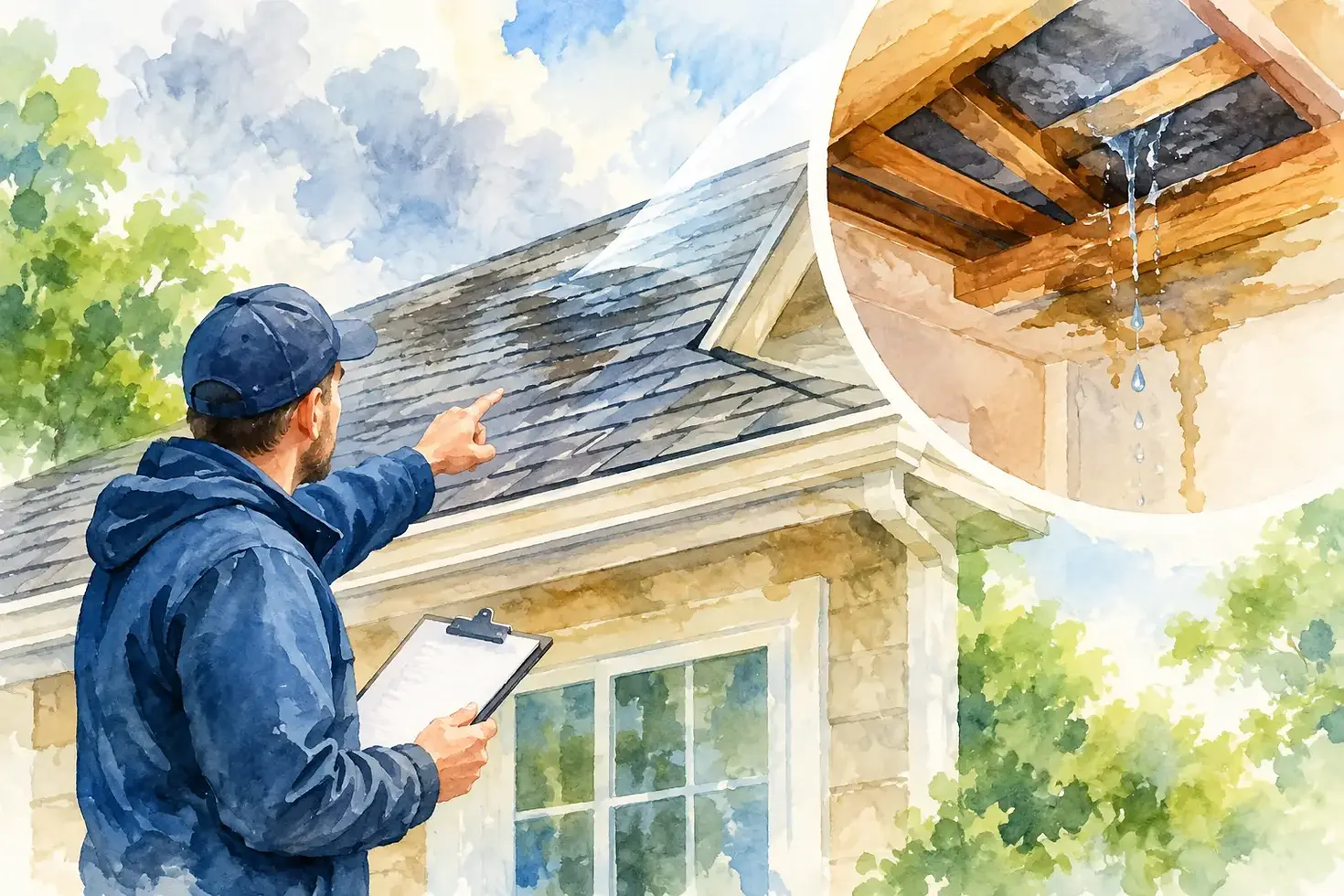
Roof Leak Diagnosis That Finds the Real Source
A brown ceiling stain in a Welland home may appear directly below the leak, but it often is not where rainwater entered the roof. Water can run along roof decking, rafters, plumbing vents, insulation, or electrical penetrations before it reaches the ceiling. That is why accurate roof leak diagnosis is about tracing a path, not simply patching the nearest wet spot.
A prompt inspection protects more than drywall. Left alone, even a small roof leak can soak insulation, rot wood, encourage mould growth, damage finishes, and turn a targeted repair into a much larger project. The right response is calm, safe, and methodical.
Start by Containing Water and Documenting What You See
If water is actively dripping indoors, move furniture, electronics, and valuables out of the area. Place a bucket under the drip and use towels to protect flooring. If the ceiling is bulging with trapped water, do not stand beneath it or puncture it unless you can do so safely and understand the risk. Water near light fixtures, outlets, or electrical panels calls for extra caution. Turn off power to the affected area if it is safe to do so, then contact a qualified professional.
Take photos of the stain, dripping water, damaged finishes, and the exterior area of the roof if it can be photographed from the ground. Note when the leak appeared. Did it start during steady rain, after wind-driven rain, during a thaw, or only after snow accumulated? Those details give a roofing contractor useful clues.
A leak during every rainfall may point to failed shingles, flashing, a penetration, or an open roof seam. A leak that occurs only in strong winds can indicate wind-lifted materials or a flashing detail that allows water in from one direction. Water appearing during a winter thaw may be related to ice damming, attic heat loss, or poor ventilation rather than a simple missing shingle.
Roof Leak Diagnosis Begins Inside the Attic
When conditions are safe, the attic is often the best place to begin. Look for wet insulation, darkened roof sheathing, stained rafters, rusted nail tips, or daylight around a roof penetration. Follow staining uphill from the wettest area. The actual entry point is frequently above the visible evidence.
Fresh leaks may leave wood that feels damp or looks darker than the surrounding sheathing. Older leaks can leave black staining, softened wood, peeling plywood layers, or a musty smell. Keep in mind that condensation can look similar to a roof leak. If moisture is spread broadly across the underside of the roof deck, especially in cold weather, inadequate attic ventilation or air leakage from the home may be part of the problem.
This distinction matters. Replacing a few shingles will not fix moisture created by warm indoor air reaching a cold attic. Likewise, adding vents without addressing damaged flashing will not stop rainwater. A dependable diagnosis separates rain entry, snow and ice issues, plumbing or masonry leaks, and attic condensation before work begins.
Check the Roof Areas Most Likely to Leak
Most roof leaks occur at transitions and penetrations, not in the middle of an intact roof field. A professional exterior inspection should focus on the details that direct water around openings and changes in roof shape.
Flashing Around Chimneys, Walls, and Valleys
Chimneys need properly integrated step flashing, counterflashing, and sealing at the masonry connection. Cracked mortar, loose metal, deteriorated sealant, or flashing installed over shingles instead of woven into them can let water enter. The problem may show up several feet away inside the home.
Roof-to-wall connections and valleys also need close attention. Valleys collect a large volume of water, especially during Niagara downpours. Missing granules, cracked shingles, exposed fasteners, loose valley metal, or debris buildup can create a direct path below the roofing system.
Vents, Skylights, and Other Roof Penetrations
Plumbing vents, bathroom exhaust vents, furnace flues, satellite mounts, and skylights are common leak locations because every penetration interrupts the roof surface. A cracked vent boot, lifted flashing flange, failed gasket, or dried-out sealant can be enough to cause a leak.
Skylight leaks require careful diagnosis. Water at a skylight does not always mean the skylight itself has failed. It may be coming from improper flashing, worn shingles above the unit, a blocked drainage channel, or condensation on the interior glass. Replacing a skylight before identifying the source can add cost without solving the issue.
Shingles, Fasteners, and Storm Damage
High winds can lift or crease shingles even when they do not blow completely off. Hail can remove protective granules, while tree branches can scrape or puncture roof materials. Look for missing tabs, curled edges, cracked shingles, exposed nail heads, and loose ridge caps.
Avoid climbing onto a wet, icy, steep, or visibly damaged roof. It is not worth the fall risk, and foot traffic can cause further damage to aging shingles. A ground-level view with binoculars may reveal obvious concerns, but close inspection is work for a properly equipped roofing professional.
Do Not Assume the Roof Is Always the Cause
Water stains near an exterior wall or chimney can be caused by more than roofing. Damaged siding, failed window caulking, overflowing eavestroughs, masonry cracks, and leaking plumbing can all send water into the building envelope. On flat or low-slope commercial roofs, a drain issue, ponding water, membrane seam failure, or flashing defect may be involved.
This is where experience saves time and avoids unnecessary repairs. The visible symptom can be the same, while the repair method is completely different. A careful inspection should consider the roof, attic, vents, chimneys, gutters, skylights, and adjacent exterior surfaces.
Repair, Maintenance, or Replacement? It Depends
Not every leak means a new roof is needed. If the roof is otherwise in good condition and damage is limited to a vent boot, flashing section, a few shingles, or a localized flat-roof seam, a focused repair can be the practical choice. It is typically faster and more affordable than replacement.
Replacement becomes more sensible when leaks are recurring, shingles are near the end of their service life, decking has widespread damage, or several areas have been repaired over time. Matching older shingles can also be difficult, and repeated spot repairs may not offer good value if the roof system is failing in multiple places.
For landlords, property managers, and commercial decision-makers, the calculation should include disruption risk. A low-cost temporary patch may be appropriate during an emergency, but it should be followed by a clear assessment of the long-term repair. Documented findings, photos, and a detailed estimate help plan maintenance budgets and make decisions with fewer surprises.
What a Professional Roof Inspection Should Provide
A useful roof leak diagnosis should leave you with more than a vague recommendation. You should understand where water likely entered, what evidence supports that finding, whether there is hidden damage to address, and what repair options are available.
Ask whether the estimate includes materials, flashing work, damaged decking if discovered, disposal, and any interior work that is outside the roofing scope. If a contractor recommends replacement, ask why repair is not expected to last. If a repair is recommended, ask what condition the remaining roof is in and whether nearby areas show similar wear.
For Niagara property owners, local weather experience matters. Freeze-thaw cycles, lake-effect snow, wind, and summer storms put pressure on roof edges, flashing, drainage, and aging materials. Pro.Found Roofing provides owner-on-site oversight, so concerns can be discussed directly and the work can be checked at the job site, not just quoted from a distance.
When to Call for Help Right Away
Arrange professional help promptly when water is actively entering the building, a ceiling is sagging, roof decking appears soft, shingles are missing after a storm, or a leak is near electrical equipment. The same applies when water is entering around a chimney, skylight, or flat roof drain, where the source may be more complex than it looks.
A tarp can reduce immediate exposure in some emergencies, but it is a temporary measure, not a repair. Do not let a dry day convince you the issue is gone. Roof leaks often stop being visible before the trapped moisture has dried or the original entry point has been corrected.
The best next step is simple: record what you are seeing, keep the area safe, and arrange a detailed inspection before the next storm tests the roof again. A clear diagnosis gives you the confidence to choose the right repair, protect your property, and spend your roofing budget where it will actually solve the problem.


Comments