

Standing Seam Versus Corrugated Roofing Compared
A steel roof can be one of the longest-lasting parts of a property, but the panel style affects what you pay, how it handles weather, and how much maintenance it may need over time. When comparing standing seam versus corrugated roofing, the right choice is rarely just about appearance. It comes down to your roof shape, budget, building use, and expectations for the decades ahead.
For a Niagara home, rental property, farm building, shop, or commercial project, both systems can be practical options. The difference is that standing seam is generally a premium concealed-fastener system, while corrugated metal is a more economical exposed-fastener panel style. Knowing what that means before requesting estimates helps you make a confident decision.
Standing Seam Versus Corrugated Roofing: The Main Difference
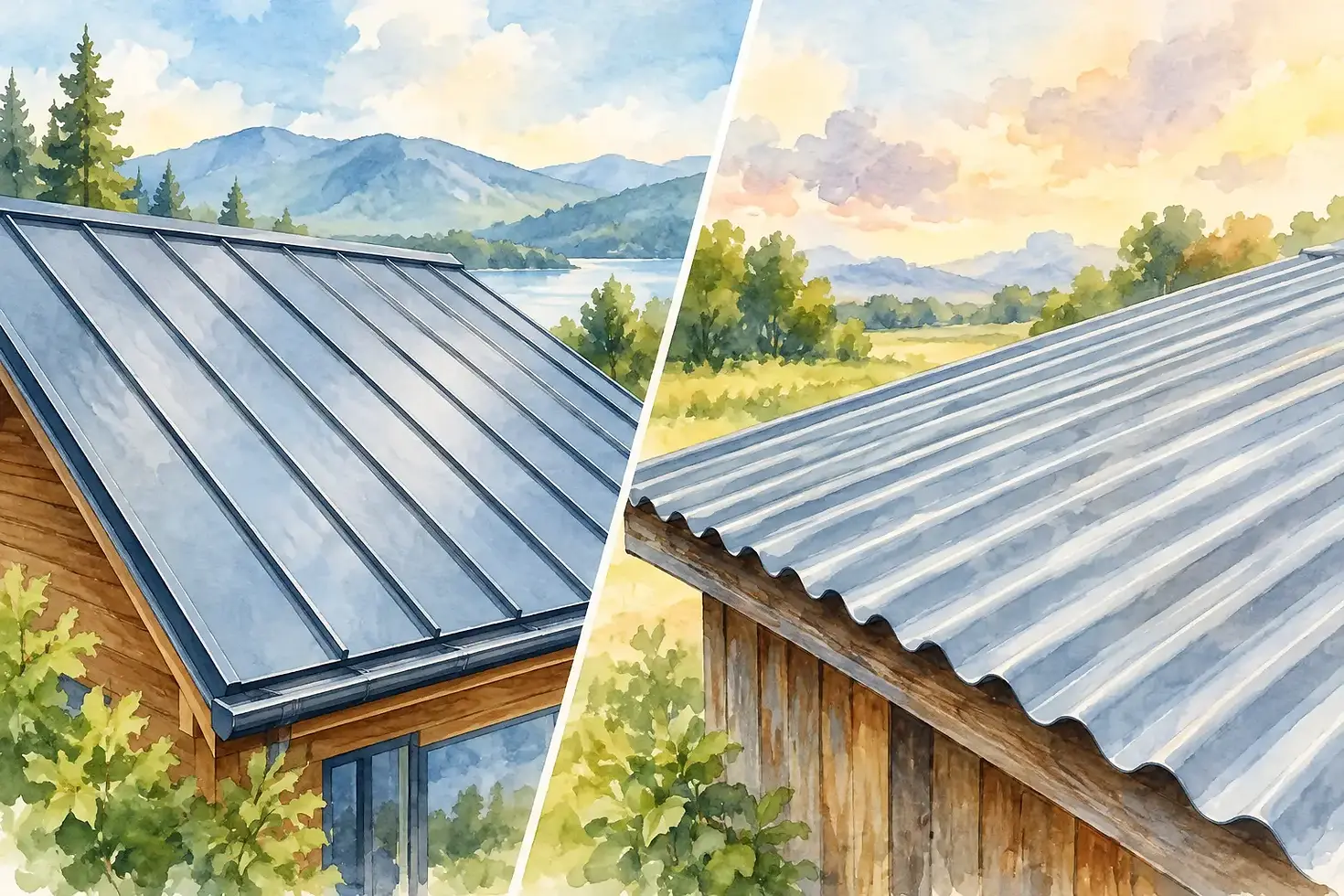
Standing seam roofing uses long metal panels that connect at raised vertical seams. The clips and fasteners are usually hidden beneath the panels, so the finished roof has clean lines with no visible screws across the main surface. Panels may be mechanically seamed or snap together, depending on the product and installation requirements.
Corrugated roofing uses panels with repeating waves or ribs. It is commonly installed with visible screws that pass through the face of the panel and into the roof deck or framing. Many people use “corrugated” to describe several exposed-fastener metal profiles, including classic wavy sheets and ribbed steel panels.
That fastening method is the key distinction. Standing seam protects fasteners from direct exposure to rain, snow, sunlight, and temperature swings. Corrugated panels leave fasteners accessible, which makes installation and future repair more straightforward but creates more points that need periodic inspection.
Appearance and Curb Appeal
Standing seam has a crisp, architectural look that works especially well on modern homes, cottages, custom builds, and higher-end renovations. Its straight vertical lines can make a roof appear taller and more refined. With no visible fasteners interrupting the panel surface, it offers a clean finish from the street and from upper windows.
Corrugated roofing has a more traditional, functional character. It is a familiar choice for barns, garages, workshops, agricultural buildings, and utility structures. It can also suit residential projects when the homeowner wants an industrial, rural, or contemporary-cottage style at a more manageable price point.
Neither look is automatically better. On a heritage-style home in Welland or St. Catharines, a corrugated profile may feel out of place unless the overall design supports it. On a detached garage, equipment building, or rental-property outbuilding, paying extra for standing seam may not deliver enough practical return. The building should lead the decision.
Cost: Upfront Price Versus Long-Term Value
Corrugated roofing is usually the lower-cost option. The panels are generally less expensive, installation is faster, and the exposed-fastener design is familiar to many roofing crews. It can be a sensible choice when coverage area is large and the project budget needs to stay tight.
Standing seam costs more because the materials, trims, clips, panel preparation, and installation process are more specialized. Roof details around valleys, chimneys, skylights, walls, and transitions require careful planning. A qualified installation matters because small mistakes with panel layout or flashing can affect both appearance and water management.
The initial price does not tell the entire story. An exposed-fastener roof may need fasteners checked or replaced as washers age, screws back out, or panels expand and contract through Ontario’s changing seasons. A properly installed standing seam roof has fewer exposed penetration points across the field of the roof, which can reduce one common maintenance concern.
For property owners comparing estimates, ask what is included. Panel thickness, coating type, underlayment, ventilation, ice-and-water protection, flashings, tear-off, deck repairs, disposal, and warranty coverage can all change the real cost of a steel roofing project.
Weather Performance in Niagara
Niagara roofs deal with snow loads, freeze-thaw cycles, high winds, driving rain, and humid summer heat. Both standing seam and corrugated metal can perform very well when the roof system is designed and installed properly.
Standing seam is often preferred for homes and commercial buildings where long-term weather protection and a low-maintenance exterior are priorities. Its concealed fastening system eliminates rows of exposed screw holes in the panel field. The raised seams also create a direct path for rainwater to move down the roof.
Corrugated roofing is durable, but its screws and sealing washers deserve attention over time. Temperature changes cause metal panels to move slightly. That movement can eventually affect fasteners, especially if the original installation used the wrong screw spacing, over-tightened washers, or poor-quality components.
Snow shedding is another consideration. Smooth metal roofs can release snow quickly, particularly on steeper slopes. This can be useful for reducing buildup, but it can also create a hazard above walkways, doors, decks, parking areas, and lower roof sections. Snow guards, proper drainage, and thoughtful placement are part of responsible metal-roof planning, regardless of panel type.
Installation Requirements Matter More Than Many People Expect
A metal roof is not simply sheets of steel screwed over an old roof. The roof deck must be sound, the slope must be appropriate for the panel system, and the details must be built to manage water. Chimney flashing, skylights, vent penetrations, eaves, valleys, and wall intersections deserve the same attention as the panels themselves.
Standing seam is less forgiving of poor workmanship because the system relies on correctly aligned panels, clips, seams, and trim. It is not a job to treat as a basic weekend installation. A contractor should confirm the manufacturer’s requirements and ensure the full assembly works together.
Corrugated roofing can be quicker to install, but quick should not mean careless. Fasteners need to be placed in the correct location, driven straight, and tightened to the proper pressure. Too loose can invite leaks. Too tight can damage the washer and shorten its service life. Proper overlaps and closures are also essential to keep out wind-driven rain, insects, and debris.
Maintenance and Repairs
Standing seam generally requires less routine attention on the panel field because its fasteners are concealed. That does not make it maintenance-free. Property owners should still inspect flashings, gutters, sealants, snow guards, penetrations, and areas around trees after major storms. Any roof can be damaged by falling branches or neglected drainage.
Corrugated roofing benefits from regular visual checks, particularly as the roof ages. Look for missing or lifted screws, cracked washers, corrosion around penetrations, loose ridge caps, and debris collecting in overlaps. Replacing a worn fastener early is usually much simpler and less expensive than waiting for a small leak to damage insulation, framing, or interior finishes.
Repairs can be easier on corrugated panels because the fasteners are visible and accessible. Standing seam repairs may require more specialized work, especially when a panel or seam has been damaged. This is one reason a detailed installation from the start is valuable.
Which Metal Roof Is Right for Your Property?
Standing seam is often the stronger fit when you want a premium finish, concealed fasteners, long-term performance, and a roof that complements a custom home or prominent commercial building. It is a larger upfront investment, but it can be worthwhile for owners planning to stay in the property or protect a high-value asset.
Corrugated roofing is often the practical choice when affordability, speed, and straightforward future repairs are the priority. It works well for garages, agricultural buildings, workshops, secondary structures, and projects where the roof needs to perform reliably without carrying the cost of an architectural panel system.
A roof with a complex shape can change the calculation. Multiple valleys, dormers, skylights, and chimneys add labour and flashing work to either option. A simple gable roof may make corrugated panels particularly cost-effective, while a highly visible front elevation may justify the investment in standing seam.
Get Advice Based on Your Actual Roof
The best material choice starts with an on-site look at the roof, not a one-size-fits-all answer. A contractor should assess the deck condition, pitch, drainage, existing leaks, ventilation, penetrations, building use, and budget before recommending a system.
At Pro.Found Roofing, the owner visits every job site to oversee workmanship and customer satisfaction. For Niagara property owners weighing steel roofing options, a detailed free estimate can clarify the right panel type, scope of work, and expected investment before the project begins. A well-planned roof protects more than the building below it - it makes the next twenty years of ownership easier to manage.


Comments